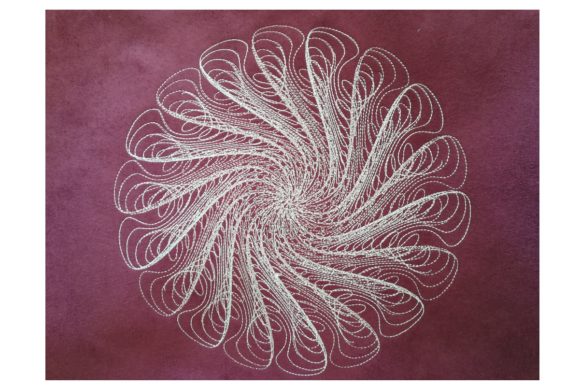
Spiral Fantasy: A Designer’s Review for Craft Fairs
As an embroidery designer who has spent countless hours behind the hoop and even more time standing behind a booth table at weekend markets, I look at every new machine embroidery design with a critical eye. It is not just about whether the stitches look pretty on the screen; it is about whether the final piece will stop a shopper in their tracks. Recently, I evaluated Spiral Fantasy, a bold and intricate pattern intended for the House category of Embroidery products. With dimensions of 200mm x 200mm (8″ x 8″), this is not a subtle accent. It is a statement piece. Here is my professional breakdown of how this design performs in the real world of handmade sales.
First Impressions: Boldness Meets Complexity
The title Spiral Fantasy suggests movement, depth, and perhaps a touch of whimsy or modern abstraction. When I first loaded the digital embroidery file, the immediate impression was one of substantial presence. This is not a minimal, single-line motif. It is a large-scale design that demands attention. For craft fair sellers, this is a double-edged sword. On one hand, bold designs are easier to spot from across the aisle. On the other, they require the right canvas to shine. The description notes that it "takes some time to stitch out," which signals high stitch density. In person, this translates to a premium, textured look that feels luxurious to the touch—a key selling point for customers comparing handmade goods to mass-produced items.
Strategic Product Placement for Maximum Sales
Not every product is suitable for an 8″ x 8″ design. As a boutique maker, you must be strategic. Here is where Spiral Fantasy truly excels:
- Tote Bags and Market Bags: This is arguably the best application. A large cotton or canvas tote provides the flat, stable surface needed for such a sizable design. The tote bag design becomes the focal point, turning a simple utility item into a fashion accessory. Shoppers love unique bags, and this design offers enough visual interest to justify a higher price point.
- Pillow Covers: The product description explicitly mentions cushions. An 8″ square fits perfectly on standard 16″ or 18″ throw pillows, leaving ample border space. This creates a balanced, professional look that appeals to home decor shoppers looking for that perfect pop of pattern.
- Table Runners: Placing this design at the end of a linen or cotton runner adds an elegant, custom touch. It works particularly well for seasonal displays or as a centerpiece for handmade gift sets.
However, I would advise caution with smaller items. While you might be tempted to use it on a tea towel embroidery project, ensure the towel is large enough. Standard flour sack towels might feel overwhelmed by an 8″ design unless you are aiming for an all-over print aesthetic. Similarly, for apron embroidery, place it carefully on the bib or lower skirt, ensuring it does not interfere with pockets or straps.
Production Realities: Time, Texture, and Technique
Let’s talk about the practical side of running a small shop product line. The description states the design "takes some time to stitch out." This is crucial for your pricing strategy. You cannot price this item the same as a quick-stitch monogram. You are selling your machine time and expertise. Because of the likely high stitch count, thread breaks can be more frequent if tension is not perfect. I recommend using high-quality rayon or polyester threads to handle the density without snapping.
Fabric choice is equally critical. The fabric texture must support the weight of the stitching. Lightweight silks may pucker under such a large, dense design. Instead, opt for medium-to-heavy weight cottons, linens, or denim. If you are attempting this on a curved surface like a cap, be wary. An 8″ design is generally too large for standard caps unless it is split or placed very specifically on the back panel, which is risky for visibility. Stick to flat surfaces for the best finished product quality.
Stabilizer and Hoop Considerations
Given the size, you will need a sturdy stabilizer. A cut-away stabilizer is often safer for garments like tote bags that will undergo washing and wear, while tear-away might suffice for decorative pillows that see less stress. Ensure your hoop size accommodates the full 200mm x 200mm area. Many standard hoops are 5x7 or 6x10 inches. You will likely need an 8x8 or larger hoop. If you do not have a large hoop, check if the design comes split into parts, though the description implies a single continuous run. Always verify these technical specs in the design assets package before purchasing.
Visual Appeal and Marketing Your Handmade Product
For the Etsy seller or online vendor, photography is everything. Spiral Fantasy photographs beautifully because of its texture. The interplay of light and shadow on the dense stitches creates depth in photos. Use natural light to highlight the raised elements of the spiral. Create a printable mockup or, better yet, a real-life sample to show scale. Customers often struggle to visualize size online. Showing the design on a bag next to a common object, like a coffee cup or a book, helps convey the 8″ scale effectively.
This design also serves as an excellent booth sample. Its complexity signals "high effort" and "high value." When customers see the intricate stitching up close, they understand why your craft fair product costs more than a printed equivalent. It builds trust in your brand’s quality. Use it as a conversation starter. Explain the process, the thread choices, and the care taken in production. This narrative adds emotional value to the purchase.
Careful-Use Notes for Professional Results
To ensure consistency across your inventory, keep these tips in mind:
- Test on Scrap Fabric: Never run this design on your final product first. Test on the exact same fabric type to check for puckering or registration issues.
- Thread Contrast: Choose thread colors that contrast well with the fabric. If the spiral details are intricate, low contrast may cause the design to look muddy from a distance.
- Dark Fabric Challenges: If stitching on dark fabrics, consider using a lighter bobbin thread or a topping if the fabric has a nap, to prevent the background from showing through the stitches.
- Commercial Licensing: Before listing any commercial embroidery items, confirm the license terms of the embroidery file. Ensure you have the right to sell finished products made with this design.
In conclusion, Spiral Fantasy is a powerful addition to a designer’s library. It is not a quick fill-in design; it is a feature element. When used on the right products—specifically large, flat surfaces like totes and pillows—it elevates the perceived value of the item. For the serious handmade business owner, it offers the kind of visual impact that turns browsers into buyers. Just respect the production time, choose your materials wisely, and let the intricate stitching speak for itself.