Checkered Flags: A Designer’s Review for Craft Fairs
As an embroidery designer who has spent countless hours hunched over hoops and scanning stitch maps, I know that not every machine embroidery design is created equal. Some are technically impressive but commercially dull. Others are simple yet possess that magnetic quality that stops a browser in their tracks at a busy weekend market. Today, I am putting the Checkered Flags design under the microscope. This isn’t just about aesthetics; it is about viability. If you are an Etsy seller, a boutique maker, or a craft fair veteran, you need to know if this Sports themed motif will actually move inventory.
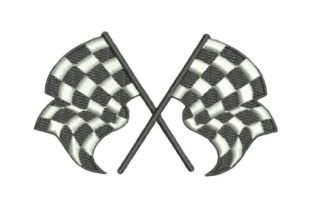
The premise of Checkered Flags is straightforward: "Get your game on with this cool Checkered Flags embroidery design. It's perfect for any project related to race cars or sport." In the world of Embroidery, simplicity often wins. The checkered flag is a universal symbol of speed, victory, and adrenaline. My first impression? It feels bold, modern, and energetic. It lacks the frills of farmhouse chic or the delicacy of floral elegance, which is exactly its strength. It speaks directly to a specific demographic: racing fans, fathers, sons, and anyone who appreciates high-octane hobbies. For a craft fair product, this clarity is vital. Customers do not have time to decipher abstract art while walking past your booth. They need instant recognition, and this design delivers it.
Product Potential and Market Fit
When evaluating where Checkered Flags performs best, we must look beyond the standard t-shirt. While apparel is a staple, the real money in handmade markets often lies in home goods and accessories. Let’s talk about the tote bag design potential. A canvas tote featuring this motif, perhaps paired with a witty phrase about "fast lanes" or "pit stops," becomes an immediate hit for dad gifts or garage decor. The bold black-and-white contrast of the flag pops beautifully against natural canvas or denim, making it a strong visual anchor.
Consider the apron embroidery market. Grilling aprons are perennial bestsellers. Placing Checkered Flags on the bib of a heavy-duty canvas apron transforms a utilitarian item into a themed gift for the backyard pit crew. Similarly, tea towel embroidery offers a lower price point entry for customers. A set of kitchen towels with small, crisp flag motifs can be bundled as a "Racer’s Kitchen" set. The key here is placement. On towels, the design must be scaled correctly to avoid looking lost in the fabric weave.
For those focusing on smaller items, the embroidered patch route is highly lucrative. Patches are impulse buys. A well-digitized checkered flag patch can be ironed onto jackets, backpacks, or hats. This design’s geometric nature makes it ideal for patch production, as straight lines and sharp corners tend to hold up well if the digitizing is tight. Additionally, consider fabric pouches and pencil cases. These small shop product staples appeal to students and young adults. The sporty vibe aligns perfectly with back-to-school shopping trends.
Production Practicality and Stitch Quality
From a production standpoint, the ease of stitching determines your profit margin. You need a design that is repeatable for batch production without constant thread breaks or trimming nightmares. The description notes that the digital embroidery file comes in multiple formats and is compatible with various machines. This versatility is crucial for commercial embroidery operations where you might switch between single-needle home machines and multi-needle commercial units.
However, we must address stitch density. Checkered patterns can be tricky. If the squares are too small, the needle perforations can weaken the fabric, leading to tearing. If the density is too high, the design becomes stiff and cardboard-like. As a designer, I advise you to test the design on scrap fabric before committing to your final inventory. Pay close attention to the transition areas between the black and white sections. Are there jump stitches that need trimming? Excessive trimming kills your hourly wage. A clean design should minimize these interruptions.
Thread colors are another critical factor. This design relies heavily on contrast. Using a high-sheen rayon or durable polyester thread for the white sections ensures they stand out against dark fabrics. If you are stitching on black or navy material, ensure your white thread has enough coverage. Sometimes, a double layer of stitching or a slight underlay adjustment is necessary to prevent the background fabric from showing through the white areas. This is where checking the design assets and previewing the stitch-out simulation becomes non-negotiable.
Navigating Fabric and Hoop Constraints
One of the biggest challenges with geometric designs like Checkered Flags is maintaining straight lines on curved or textured surfaces. If you are applying this to caps, remember that the front panel is curved. A large, rigid design can cause puckering. You must use the right stabilizer. For caps, a stiff cut-away or a specialized cap backing is essential. For fabric texture considerations, avoid using this design on highly textured towels unless you use a water-soluble topping. Otherwise, the tiny details of the checkers may sink into the loops of the terry cloth, losing their definition.
Hoop size also dictates your product range. Since the exact dimensions are not specified in the brief description, you must verify the maximum hoop size required. If it fits in a 4x4 inch hoop, you are limited to small accents like pockets or patches. If it requires a 5x7 or larger, you can tackle tote bags and pillow covers with ease. Always confirm the hoop size compatibility with your machine before purchasing the file. Nothing is more frustrating than buying a design only to realize it doesn't fit your standard hoop for your best-selling items.
Visual Appeal and Branding Strategy
How does Checkered Flags affect your brand consistency? If your shop leans towards soft, pastel, or rustic aesthetics, this design might feel jarring. However, if your brand embraces bold, graphic, or masculine themes, it is a perfect fit. It adds variety to your portfolio and attracts a different segment of buyers. In a booth display, this design serves as a strong visual break. Amidst a sea of floral pillows and cute animal motifs, a sleek, sporty item draws the eye of male shoppers or those looking for non-traditional gifts.
Photography plays a huge role in online sales. Geometric designs photograph exceptionally well because they create sharp lines and high contrast. When creating your printable mockup or staging real photos, ensure the lighting highlights the texture of the stitches. Flat lighting can make embroidery look like printing. Use side lighting to cast subtle shadows that emphasize the raised nature of the threads, proving it is a genuine handmade product.
Final Designer Notes for Success
Before you launch this design into your store, follow these practical steps. First, check the commercial licensing. The description implies it is for products, but always read the specific license terms included with the download. Second, create at least one real mockup. Digital previews can be deceiving. Stitch it out on the actual fabric you plan to sell. Third, compare fabric colors. Does the white thread pop on heather grey? Does the black thread blend too much on navy? Test these combinations.
Finally, consider the customer experience. Is the design easy to understand at a glance? Yes. Does it feel premium? It can, if the stitching is clean and the fabric choice is high-quality. Checkered Flags is not just a picture of a flag; it is a tool for connecting with a passionate community of racing enthusiasts. By treating it with technical precision and strategic marketing, you can turn this simple embroidery file into a consistent revenue stream for your creative business. Remember, in the world of handmade sales, clarity and quality are your fastest routes to the finish line.