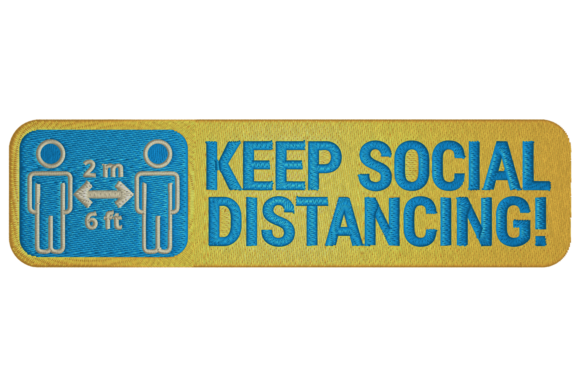
Keep Social Distance: A Designer’s Review
As an embroidery designer who has spent years digitizing files for small businesses, boutique brands, and large-scale apparel decorators, I approach every new machine embroidery design with a critical eye. It is not just about whether the stitches look pretty; it is about whether the design holds up in the real world of commercial production. Recently, I reviewed the Keep Social Distance design, a digital file that sits within the Family category of embroidery assets. This review focuses on its viability for branded merchandise, staff uniforms, and small business product lines.
The first impression of Keep Social Distance is one of timely relevance mixed with classic utility. In the current market, designs that reference health safety or personal space need to strike a delicate balance. They must be informative without being aggressive, and professional without being sterile. Based on the description, this design is digitized by hand, which is a significant indicator of quality. Hand-digitized files typically offer better stitch flow and fewer jumps than auto-digitized counterparts, resulting in a cleaner finished product. The aesthetic feels modern yet approachable, making it suitable for a wide range of industries, from local cafes to creative studios.
Real-World Applications for Small Business Merch
For small business owners and Etsy sellers, versatility is key. You need a digital embroidery file that can work across multiple products to maximize your return on investment. The Keep Social Distance design is available in six sizes, which is a crucial feature for commercial use. Here is how I envision this design performing in various business scenarios:
- Staff Uniforms and Aprons: For bakeries, florists, or coffee shops, hygiene and safety are paramount. Embroidering this design on the chest pocket of an apron or the sleeve of a work shirt serves as a gentle, permanent reminder to customers. It reinforces brand values regarding safety and care.
- Embroidered Patches: This is perhaps the strongest use case. By stitching the design onto twill or felt backings, you create removable embroided patch assets. These can be sold as standalone items or used to customize tote bags and denim jackets. Patches allow for inventory flexibility, as they can be applied to different garments post-production.
- Tote Bag Design: Reusable bags are a staple for boutique retail. Placing this design on a canvas tote adds a layer of social consciousness to the product. It transforms a simple bag into a statement piece that aligns with community-focused brand identity.
- Cap Embroidery: Front-panel caps are high-visibility items. If the smallest size of the file is optimized for curved surfaces, this design can serve as a subtle accent on headwear, appealing to customers who prefer understated branding.
Evaluating Visual Personality and Brand Identity
When integrating Keep Social Distance into your design assets, consider the emotional tone it conveys. The phrase itself is directive, but the execution in embroidery can soften it. If the font choice within the design is rounded or handwritten, it feels friendly and handmade. If it is sans-serif and bold, it feels authoritative and clean. For a family-oriented business or a community center, this design can reinforce a message of collective care. It builds customer trust by showing that the business is attentive to well-being.
However, context matters. A luxury boutique might find the phrase too casual, whereas a craft store, pet brand, or local eatery would find it perfectly aligned with their community vibe. The goal is to ensure visual consistency. If your other custom apparel features whimsical, rustic elements, ensure this design complements that style rather than clashing with it. The thread colors you choose will heavily influence this perception. Neutral tones like navy, slate, or olive green convey professionalism, while bright primaries might feel more playful or urgent.
Technical Considerations for Production
Before running this design on your commercial machines, there are several technical factors to evaluate. Since the product description notes it is digitized by hand, we can expect reasonable stitch quality, but you must still perform due diligence. Here are my practical notes for ensuring a high-quality output:
- Test Stitch Density: Check the stitch density on the smallest available size. If the letters are too close together, the fabric may pucker, especially on lighter materials like t-shirts. Always test on a scrap piece of the actual fabric you intend to use.
- Stabilizer Selection: For items that undergo frequent washing, such as staff uniforms or tote bags, using the correct stabilizer is non-negotiable. A cut-away stabilizer is often best for garments to prevent distortion over time, while tear-away may suffice for decorative patches that are not washed frequently.
- Hoop Size Compatibility: Verify that the largest size of the design fits within your standard hoop dimensions. If you are using a multi-needle machine, ensure the design does not require excessive re-hooping, which can lead to alignment issues.
- Fabric Texture: Textured fabrics like terrycloth or heavy canvas can obscure fine details. If the design includes thin lines or small text, avoid using it on highly textured materials unless you use a topping sheet to keep the stitches visible.
- Color Contrast: Test the design in black and white first. If it loses legibility without color, it may rely too heavily on hue differences rather than shape. High contrast between the thread and the fabric is essential for readability, especially from a distance.
Where to Use Caution
While Keep Social Distance is versatile, it is not universal. Avoid using the smallest size on curved surfaces like cap fronts if the lettering becomes illegible. Tiny lettering tends to fill in with thread after a few washes, turning words into blobs. Additionally, be cautious with dark uniforms. If the design relies on light-colored threads, ensure your digitizing includes proper underlay stitches to prevent the garment color from showing through and muddying the design.
Another area of caution is the frequency of washing. Items like kitchen aprons face harsh conditions. Ensure the design is robust enough to withstand industrial laundering. If the stitch count is excessively high for a small area, it may create a stiff patch that is uncomfortable for the wearer. Always prioritize the comfort of the end-user, especially for staff uniforms.
Enhancing Customer Engagement and Value
Incorporating this design into your small business merch strategy can enhance buyer engagement. Customers appreciate when brands take a stand on social issues or prioritize safety. By offering products featuring Keep Social Distance, you are not just selling an item; you are selling a sense of security and community responsibility. This can increase the perceived value of your handmade product lines.
For online sellers, creating a printable mockup of this design on various products can significantly boost conversion rates. Show the design on a tote bag, a cap, and a patch side-by-side. This helps customers visualize the versatility and quality of the embroidery. It also demonstrates your professionalism as a creator who pays attention to detail.
Final Verdict for Commercial Use
The Keep Social Distance embroidery design is a solid addition to a commercial library, particularly for businesses focused on community, health, and family. Its hand-digitized nature suggests a level of care that translates well to physical products. However, success depends on proper execution. Always check the specific file formats provided to ensure compatibility with your machine software. Confirm the commercial licensing terms before using it for profit, as this varies by designer.
By testing on real fabric, choosing appropriate thread colors, and selecting the right size for each application, you can turn this digital asset into a profitable component of your branded merchandise. Whether used for a subtle chest logo or a bold back patch, this design offers a meaningful way to connect with customers through the timeless craft of Embroidery. Remember, the best designs are those that serve both the brand’s message and the wearer’s experience.